

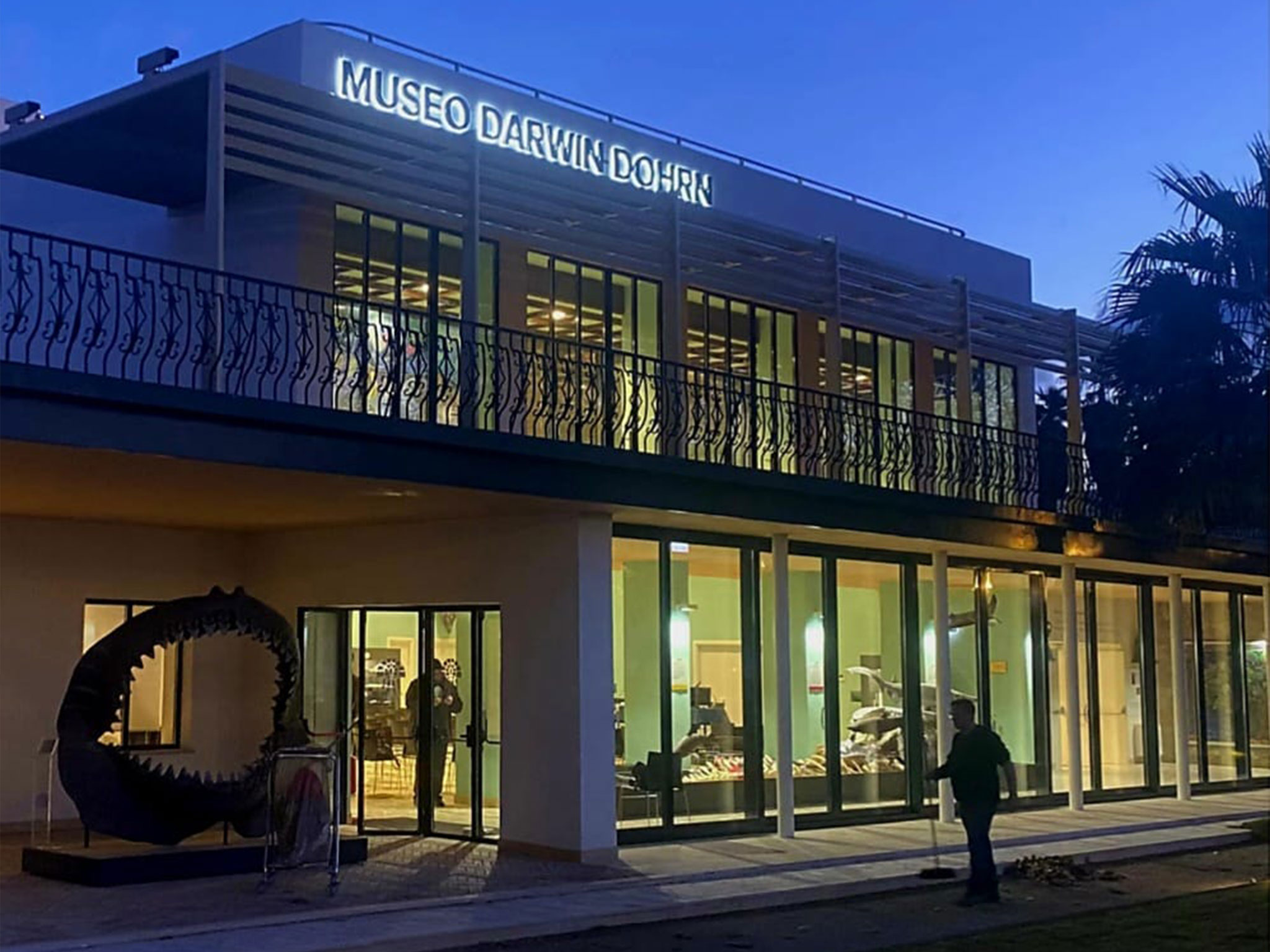
Naples, 9 December 2025 – Next Geosolutions, one of the leading international players in marine geoscience and offshore construction support services for the energy sector and listed on Euronext Growth Milan, will host on 10 December 2025 a unique event that not only celebrates the upcoming Christmas season, but also highlights the fundamental role of collaboration between academia, scientific research and industry.
This occasion, nearly two years after its stock market listing, aims to highlight how this synergy is an essential driver of progress, well-being and development for the blue economy, which has now become one of the strategic pillars of sustainable development, capable of generating significant and positive impacts at the local level as well. This is a rapidly growing sector encompassing all activities linked to oceans and seas – from offshore renewable energy to environmental research, from marine ecosystem monitoring to the safety of underwater infrastructures. It is a value chain that generates economic growth, creates skilled employment and concretely contributes to the protection of marine habitats, supporting the transition towards more responsible industrial models.
Speakers throughout the evening will include:
– Roberto Bassi, President of Darwin – Dohrn Museum
– Giorgio Budillon, Vice-Rector of the University of Parthenope
– Marco Ferretti, Full Professor at the Department of Business and Quantitative Studies, University of Parthenope
– Giordano Giorgi, ISPRA Executive, Manager of the PNRR Marine Ecosystem Restoration (MER) project
– Attilio Ievoli, Chairman NextGeo e CEO Marnavi
– Giovanni Ranieri, CEO NextGeo
– Giuseppe Maffia, CFO NextGeo
– Alessandro Buffa, CEO Rana Subsea
The debate will be moderated by Mariasole Bianco, marine conservation scientist and science communicator, co-founder and President of Worldrise, a non-profit organisation that has been working for over a decade to ensure effective conservation of Italy’s seas. An author and presenter of documentaries for Rai3, she has taught at the University of Genoa, is recognised among the most influential Italian women by Forbes, Il Sole 24 ORE and La Repubblica, and has received major awards for her commitment to marine conservation and the positive impact of her work.
An outstanding venue: the Darwin – Dohrn Museum
The evening will take place in the prestigious Darwin–Dohrn Museum, a symbol of Naples’ scientific heritage and its long-standing tradition in marine research. The museum stems from the legacy of the Anton Dohrn Zoological Station, founded in 1872 by biologist and philosopher Anton Dohrn, a supporter of Charles Darwin’s evolutionary theories. The institution, one of the oldest marine research centres in the world, was conceived as an international hub that is open, interdisciplinary and innovative, capable of uniting science, culture and public engagement.
The Darwin–Dohrn Museum hosts historical specimens, scientific instruments, naturalistic models and collections that recount over 150 years of studies on marine organisms, evolution and Mediterranean ecosystems. Immersive pathways, environmental reconstructions and historical display cases guide visitors on a journey through biodiversity and the foundations of evolutionary biology.
Located within the historic Villa Comunale, the museum today represents a unique cultural centre in the European landscape: a place where the past and future of science meet with elegance, exclusivity and inclusiveness.
***
Universities and research: a strategic axis for local development
NextGeo reaffirms its commitment to the academic world, recognising it as an integral part of its growth path.
Within this framework of synergy between research and industry lies the work of eGUARDIAN, an innovative start-up launched in collaboration with the University of Parthenope and focused on the sustainable Blue Economy. Founded with the mission of understanding and protecting coastal environments, eGUARDIAN combines advanced technologies and high-level expertise to address the most urgent environmental challenges, developing consultancy, monitoring and training solutions for coastal health. The start-up focuses on acquiring and analysing environmental data in marine-coastal areas, using technologies such as remotely operated marine drones (USVs), autonomous robotic platforms, embedded sensors and Big Data Analytics. By working with public bodies, private organisations and NGOs, eGUARDIAN helps promote the balance of marine ecosystems and raise awareness of the sustainable use of resources in crucial areas such as coastal zones. The start-up was also created to offer new employment opportunities to local professionals, providing tangible evidence of the strong momentum in the sector and the significant economic benefits for the region.
Giorgio Budillon, Vice-Rector of the University of Parthenope, stated: “The University of Parthenope of Naples and Next Geosolutions share a strong relationship in the field of marine sciences and Earth observation. The University, long committed to research into the marine environment, climate change and technologies applied to geophysics, finds a natural partner in Next Geosolutions thanks to its experience in offshore geophysical surveys and advanced geo-engineering services. Collaboration between the two strengthens technical expertise, joint projects and training opportunities for young researchers, helping to build an effective bridge between academic research and industrial applications in the marine and environmental sectors.”
Marco Ferretti, Full Professor at the Department of Business and Quantitative Studies, added:
“Next Geosolutions has played a strategic role in shaping Naples’ marine ecosystem, helping consolidate a development model based on innovation, sustainability and local cooperation. The structured, ongoing relationship with the University has made it possible to enhance the region’s human and scientific capital, transforming it into a driving force for growth and competitiveness. At the same time, through challenges aimed at local start-ups, the company has stimulated new entrepreneurial leadership, supporting solutions with high added value and strengthening the capacity of the local system to compete nationally and internationally.”
***
Commitment to protecting and restoring Italy’s marine ecosystems: the PNRR MER project by ISPRA
The evening will also highlight the PNRR Marine Ecosystem Restoration (MER) project, the most important national programme dedicated to studying, protecting and restoring marine habitats, implemented by ISPRA and funded by the Ministry of Environment and Energy Security with €400 million (Mission 2, Investment 3.5).
The project includes structural interventions for mapping and characterising marine and coastal ecosystems, restoring vulnerable habitats – including Posidonia oceanica meadows, coralligenous habitats and Cystoseira forests – and rebuilding European flat oyster beds in five Adriatic regions. It also foresees advanced monitoring activities, mapping of 79 underwater mountains, strengthening national observation networks, recovering abandoned fishing gear and acquiring a new major research vessel for monitoring and oceanographic research.
Giordano Giorgi, ISPRA Executive and Manager of the MER project, stated: “The MER project makes an essential contribution to increasing knowledge of Mediterranean marine ecosystems, particularly deep-sea habitats, and reversing current degradation trends, opening new development opportunities for the blue economy, which plays a crucial role for our country”.
As part of this strategic programme, NextGeo is engaged in deep-sea habitat mapping activities, contributing technologies and specialist expertise such as Multibeam and Sub-Bottom Profiler geophysical surveys, ROV operations, CTD and current measurements, as well as advanced data processing and interpretation services. Activities are carried out using two dedicated vessels, operating in Italian waters at depths between 150 and 2,000 metres, over an area of more than 9,000 km², with the aim of producing detailed knowledge of the biological, physical and geological characteristics of deep-sea habitats.
This part of the programme, in line with the overall MER objectives, will conclude in 2026 and will make a decisive contribution to defining new strategies for the protection and conservation of marine biodiversity.
***
Innovation, vision and autonomous technologies: the role of NextGeo in the new Blue Economy
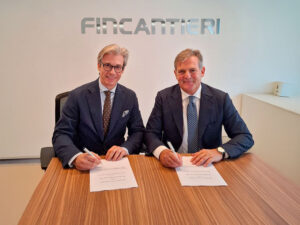
Innovation has always been the beating heart of NextGeo and one of the pillars of its industrial strategy. In a global context where the blue economy is called upon to support the energy transition, safeguard marine ecosystems and develop strategic infrastructures for the future, the company is increasingly investing in Research & Development, specialist skills training and collaboration with universities, research centres and leading international industrial partners. Its internal R&D Department works to integrate emerging technologies – from artificial intelligence to marine robotics and advanced monitoring systems – with the goal of improving the quality and safety of offshore operations, reducing environmental impact and enhancing the ability to collect, interpret and leverage complex data. Among the most significant partnerships is the recently signed agreement with Fincantieri, through its subsidiary IDS, for the development of Unmanned Surface Vehicles (USVs) and autonomous technologies for the offshore sector. The memorandum of understanding aims to advance the SAND (Surface Advanced Naval Drone) project and design new high-efficiency unmanned platforms for monitoring, inspection and control of offshore energy infrastructures. The initiative brings together Fincantieri’s engineering expertise and NextGeo’s operational experience in marine surveys, with the aim of increasing safety, autonomy and sustainability in maritime operations, paving the way for solutions integrating USVs with traditional vessels for high-complexity missions. NextGeo’s strategic vision also focuses on the integration of ROVs and other unmanned systems, essential for reducing risks, improving survey precision and minimising environmental impact.
Giovanni Ranieri, CEO of NextGeo, commented: “The collaboration between science, industry and academic institutions is today the true catalyst for innovation. NextGeo was founded and continues to grow within this ecosystem: we believe that cross-disciplinary knowledge, openness to advanced research and investment in autonomous technologies – from unmanned systems to artificial intelligence platforms – are key to building sustainable and competitive long-term solutions. Our commitment to R&D and strategic partnerships such as the one with Fincantieri reflect our ambition to look ahead, developing tools that make offshore operations safer, more efficient and more environmentally responsible. This Xmas Party is a special opportunity for us to celebrate not only a path of growth, but also the people, skills and collaborations that are shaping a new future for the ocean economy”.